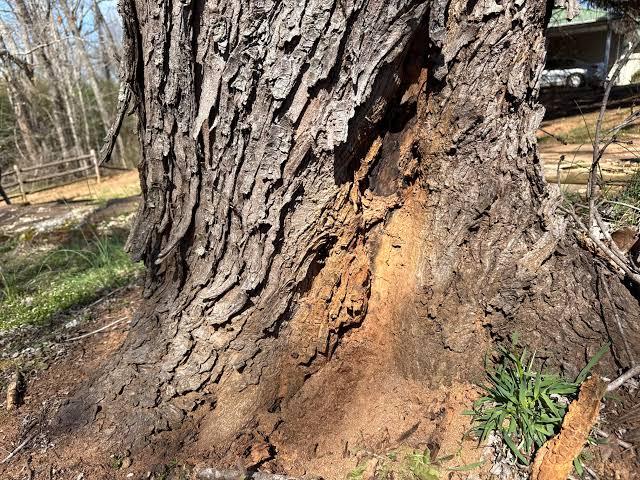
Bark falling off tree trunks can be perfectly normal, or a sign of serious trouble, and which one it is depends on the species and the pattern. Some trees, like sycamore, birch, and certain pines, shed bark naturally as they grow. But sudden or extensive loss on species that do not normally exfoliate usually points to stress, disease, pests, or damage. Merkel’s Tree Service sees both across Berks County, and the key is knowing which pattern you are looking at before you panic or ignore a real problem.
Is Bark Falling Off a Tree Always a Problem?
No. Some species are built to shed bark as they mature. Natural shedding happens on sycamore, London plane, river birch, and shagbark hickory, which peel outer layers in plates or strips to make room for growth, revealing lighter wood underneath. The MSU Extension on bark shedding confirms that this summer shedding is normal for these species. Some pines shed older bark plates the same way.
The concerning pattern is sudden, patchy, or extensive loss among species that do not naturally shed. Here is a quick test: scratch the wood under the missing bark with your thumbnail. Green and moist means the cambium is alive and the tree is stressed, but may recover. Gray, brittle, and dry means that the section is dead, which is a structural problem rather than cosmetic damage. That scratch test is the single most useful thing you can do before deciding whether to worry.
5 Reasons Bark Is Falling Off Your Tree
- Frost cracks and sunscald. Winter temperature swings damage bark on young or thin-barked trees. When the sun warms the south or southwest side of a trunk by day and temperatures drop at night, the bark cracks, dies, and peels in strips. You will see this most on maples, lindens, and fruit trees. Deep cracks warrant assessment, since they open the door to decay.
- Insect damage (borers). Wood-boring insects tunnel under bark to feed, loosening it until it sloughs off. Emerald ash borer, bronze birch borer, and others leave D-shaped exit holes about the size of a pencil eraser, serpentine galleries under the bark, and sawdust-like frass at the base. Borers disrupt the tree’s ability to move water and nutrients, so bark loss paired with these signs is serious and often requires treatment or removal.
- Fungal disease. Bark diseases like hypoxylon canker, cytospora canker, and nectria canker kill sections of bark and cambium, which then peel away in patches. Peeling tree bark disease looks different from natural shedding: irregular patches instead of clean strips, often with dark staining, oozing sap, or foul-smelling tissue underneath. Most of these are opportunistic, attacking trees already weakened by drought or poor soil.
- Physical damage. Lightning, vehicle impacts, string trimmer wounds, and animals (deer, squirrels, woodpeckers) all cause localized bark loss. The point of injury is usually obvious. Damage on one side may be survivable if the cambium is alive elsewhere, but damage that encircles the trunk is often fatal because it cuts off the vascular system.
- Natural shedding. For sycamore, London plane, river birch, and shagbark hickory, this is normal growth, not a problem. If the loss is gradual, symmetrical, and reveals healthy wood underneath, no action is needed. It is included here so you can rule it out.
Species-Specific Guide: Bark Falling Off Oak, Maple, Ash, and Pine Trees
Bark Falling Off Oak Tree
Oaks do not shed bark heavily on their own, so bark falling off oak trees in sheets or patches is more concerning than on exfoliating species. Oak wilt is a serious regional disease, though its first symptoms usually appear as wilting and browning leaves in the canopy rather than as bark loss. Hypoxylon canker shows as dark, sunken trunk areas with bark peeling in patches, and the two-lined chestnut borer attacks stressed oaks. Bark loss on an oak, especially with canopy dieback, warrants a professional assessment.
Bark Falling Off Ash Tree
Bark loss on ash is strongly linked to emerald ash borer (EAB), an invasive beetle detected in the early 2000s. The USDA on emerald ash borer reports it has destroyed tens of millions of ash trees, and it is widespread in Pennsylvania. Look for patchy bark loss over serpentine galleries, D-shaped exit holes, and woodpecker “blonding” where birds strip bark to reach larvae. These signs together strongly suggest EAB, and infested ash trees are frequently removed as they become hazardous.
Bark Falling Off Maple Tree
Silver maples flake more than other maples, while sugar and red maples usually do not shed bark without a cause. On those, bark loss may point to verticillium wilt, frost cracks, or borer activity, especially alongside canopy dieback. Check for dead branches, wilting leaves, or discolored wood, which usually warrant evaluation.
Bark Falling Off Pine Tree
Pine bark naturally exfoliates in plates on many species, which is normal. But rapid or extensive loss can signal bark beetle activity. Southern pine beetle and Ips beetles bore under the bark of stressed pines, leaving pitch tubes (small resin masses) and sawdust, and they can kill a pine in a single season. Rapid bark loss on pine should be evaluated quickly.
For help identifying any of these on your property, our residential tree services in Berks County cover diagnosis through treatment or removal.
Peeling Tree Bark Disease: What to Look For
Disease has visual signs that separate it from other causes. Watch for discolored, sunken, or water-soaked bark; cankers, which are dead areas ringed by callus tissue; bark separating in irregular patches rather than neat strips; wet, foul-smelling tissue underneath; and progressive spread over months.
The regional culprits are hypoxylon canker on oaks and other hardwoods, cytospora canker on spruce and poplar, and nectria canker on various hardwoods. Penn State Extension on tree diseases is a strong local reference. Because most of these are opportunistic, a healthy tree resists them better than a stressed one.
When Bark Falling Off a Tree Means the Tree Is Dying
Some patterns signal terminal decline. A tree can often survive bark loss on up to about 25 percent of its circumference if the cambium underneath is alive, but loss that nearly encircles the trunk (girdling) is usually fatal, since it cuts off water and nutrients.
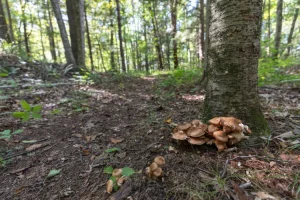
Other red flags include bark loss paired with canopy dieback, dead gray wood exposed under the missing bark, rapid loss of large sections in a single season, the same symptoms appearing on several nearby trees of one species, and mushrooms or conks emerging alongside the bark loss, which indicate established internal decay.
If you see these patterns on a tree near a structure or high-traffic area, it becomes a hazard as it weakens. In those cases, our tree removal services can take it down safely before it fails on its own.
What to Do If Bark Is Falling Off Your Tree
Work through these steps in order:
- Identify the species, which tells you whether the loss is normal or concerning.
- Note the pattern: strips, patches, or plates; one side or all around; gradual or sudden.
- Check the wood underneath with the scratch test: green means alive, gray means dead.
- Look for other symptoms like dead branches, thinning canopy, exit holes, sawdust, or fungal growth.
- Photograph the affected areas to track progression and help a professional assess it.
- Support recoverable trees. If the cambium is alive and damage is limited, appropriate tree trimming to remove dead or damaged limbs eases stress while the tree heals.
- Do not paint the wound. Research from Penn State Extension and the ISA shows wound paints and tar-based sealants slow healing and trap moisture, promoting decay. Leave wounds open to air.
If bark loss is extensive, spreading, or on a tree near your home, a free hazardous tree assessment can diagnose the cause and evaluate whether the tree can be saved.
Frequently Asked Questions
Can a tree survive if the bark is falling off?
Sometimes. Limited loss on one side with live cambium underneath is often survivable, since the tree can compartmentalize the damage. Loss that nearly encircles the trunk (girdling) is usually fatal. What matters most is how much bark is gone, whether the cambium is alive, and whether the tree shows other signs of decline like canopy dieback.
Is bark falling off my tree in strips normal?
For sycamore, London plane, river birch, and shagbark hickory, yes, strips are normal. On oak, maple, ash, and most other species, strip-like loss is a sign to investigate, usually pointing to frost damage, disease, or injury.
What insect makes bark fall off ash trees?
Emerald ash borer. Its larvae tunnel under the bark and cut off the tree’s vascular system, and the bark loosens as the galleries expand. EAB is widespread in Pennsylvania, so bark loss on ash with woodpecker damage or D-shaped exit holes should be evaluated promptly.
Should I remove the loose bark myself?
Only bark that is already fully detached and hanging loose, which can be a safety issue. Do not peel or cut bark that is still attached, even if it looks damaged, since that exposes healthy tissue to insects and disease. The tree will shed dead bark on its own.
Can I paint the exposed wood to protect the tree?
No. Penn State Extension and the ISA find that wound paints and sealants slow natural healing and trap moisture, promoting decay. Trees wall off wounds on their own, and that works better without a coating.
If you are still asking, “why is the bark falling off my tree,” the safest next step is to have it looked at. Contact Merkel’s Tree Service to schedule an assessment on tree bark peeling anywhere in Berks County.